What Is an SSL Certificate Chain? How the Chain of Trust Secures HTTPS Websites
Every time you open your favorite online store, log into your bank account, or enter personal information on a website, an invisible security process begins before any data is exchanged. Within a fraction of a second, your browser checks whether the website can be trusted, verifies its identity, and establishes an encrypted connection to protect your information from hackers and eavesdroppers. One of the most important technologies behind this process is the SSL certificate chain.
Although many website owners know they need an SSL certificate to enable HTTPS, far fewer understand how browsers actually determine whether that certificate is trustworthy. An SSL certificate alone is not enough. Instead, it must be connected through a carefully structured chain of digital certificates that leads back to a trusted authority recognized by browsers and operating systems around the world. This sequence of certificates is known as the SSL certificate chain, and it plays a critical role in ensuring secure internet communication.
Whether you are a website owner, web developer, cybersecurity student, or simply curious about how internet security works, understanding the SSL certificate chain provides valuable insight into the trust mechanisms that protect billions of online connections every day.
Understanding SSL and TLS Before Exploring Certificate Chains
Before diving into certificate chains, it helps to understand what SSL actually means. SSL, or Secure Sockets Layer, was originally developed to encrypt data transmitted between a web server and a user’s browser. Although SSL has since been replaced by the more secure Transport Layer Security (TLS) protocol, the term “SSL certificate” continues to be widely used across the internet.
When a website uses HTTPS instead of HTTP, it means that an SSL or TLS certificate has been installed on the server. This certificate serves two primary purposes. First, it encrypts communication so that sensitive information such as passwords, payment details, and personal data cannot be intercepted during transmission. Second, it verifies the identity of the website, assuring visitors that they are communicating with the legitimate server rather than an impersonator.
However, browsers cannot simply trust every certificate they receive. Anyone could theoretically create a certificate claiming ownership of any website. This is where the SSL certificate chain becomes essential.
What Is an SSL Certificate Chain?
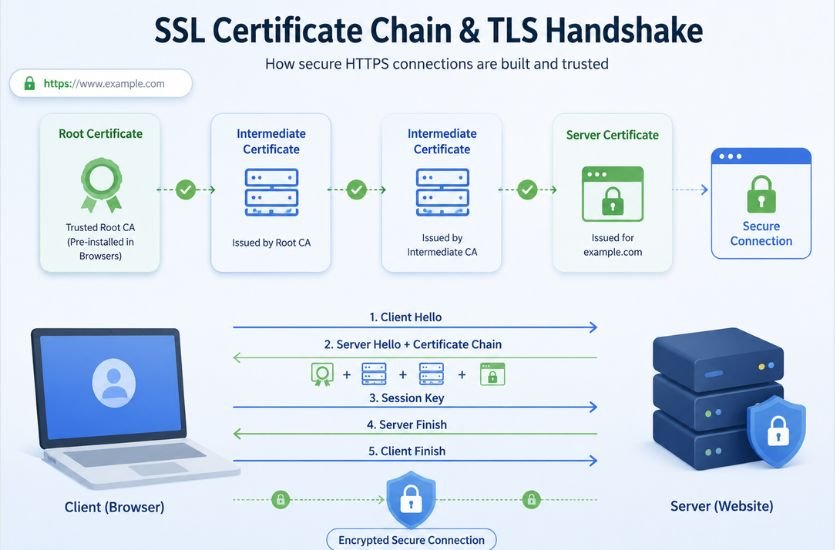
An SSL certificate chain is a sequence of digital certificates that links a website’s SSL certificate to a trusted Root Certificate Authority (CA). Each certificate in the chain is digitally signed by the certificate above it, creating a verifiable path of trust. When a browser connects to a secure website, it examines this chain to determine whether the website’s certificate ultimately traces back to a trusted authority already stored within the browser or operating system.
Think of the certificate chain as a series of references on a professional resume. A company may trust an employee because a respected manager recommends them, the manager is trusted because of a department head, and the department head is trusted because of the organization’s leadership. In the same way, browsers trust a website because its certificate is signed by an intermediate authority, which is trusted because it was signed by a recognized root authority.
If every certificate in the sequence is valid, properly signed, and unexpired, the browser establishes a secure HTTPS connection without displaying any warnings. If any part of the chain is missing or invalid, the browser cannot verify the website’s authenticity and may warn users that the connection is not secure.
Why Trust Matters on the Internet
The internet allows computers all over the world to communicate with one another, but it does not automatically guarantee trust. Every day, cybercriminals attempt to impersonate legitimate websites to steal login credentials, financial information, or personal data. Without a reliable trust system, users would have no practical way to distinguish genuine websites from fraudulent ones.
Certificate Authorities solve this problem by acting as trusted third parties. Before issuing an SSL certificate, a Certificate Authority verifies ownership of the domain and, depending on the certificate type, may also validate the organization’s identity. Once verified, the authority digitally signs the certificate, allowing browsers to recognize that the website has been authenticated by a trusted source.
The SSL certificate chain extends this trust from globally recognized Root Certificate Authorities down to individual websites, making secure online communication possible at an enormous scale.
The Three Main Parts of an SSL Certificate Chain
An SSL certificate chain generally consists of three types of certificates that work together to establish trust. Each has a distinct purpose within the overall security framework.
The first component is the Root Certificate. This is the highest level of authority within the trust hierarchy. Root certificates are self-signed, meaning they sign themselves rather than being signed by another authority. Because browsers and operating systems include these root certificates within their built-in trust stores, they automatically recognize them as trustworthy. Root certificates are carefully protected and rarely used directly to issue website certificates because compromising one would affect millions of secure websites worldwide.
The second component is the Intermediate Certificate. Rather than allowing the root authority to sign every website certificate directly, Certificate Authorities create one or more intermediate certificates. These intermediates are signed by the root certificate and are responsible for issuing SSL certificates to websites. This additional layer greatly improves security because the root certificate remains safely protected while intermediate certificates handle day-to-day certificate issuance. If an intermediate certificate is ever compromised, it can be revoked and replaced without affecting the trusted root certificate.
The final component is the Server Certificate, also known as the Leaf Certificate. This is the certificate installed directly on the website’s web server. It contains important information including the website’s domain name, public encryption key, issuing Certificate Authority, expiration date, and digital signature. During the TLS handshake, this is the certificate presented to the visitor’s browser as proof of the website’s identity.
Together, these three certificate types create a complete trust chain that enables secure communication across the internet.
The Chain of Trust Explained
The SSL certificate chain is often referred to as the “Chain of Trust” because each certificate relies on the trustworthiness of the certificate above it. Imagine climbing a ladder where every rung supports the one below. If even one rung is broken, reaching the top becomes impossible. Likewise, if any certificate within the chain is missing, expired, improperly configured, or digitally invalid, the browser cannot complete the verification process.
For example, when a user visits a secure website, the browser first receives the website’s server certificate. It then checks which intermediate certificate signed that server certificate. Next, it verifies that the intermediate certificate was signed by a trusted root certificate. Finally, it confirms that the root certificate already exists within the browser’s trusted certificate store. Once every step succeeds, the browser concludes that the website can be trusted and proceeds to establish an encrypted HTTPS connection.
This layered verification system is remarkably efficient, operating behind the scenes in just milliseconds. Users typically notice it only when something goes wrong, such as when a browser displays warnings stating that a website’s certificate is invalid or its connection is not private.
Why Browsers Already Trust Root Certificates
Modern browsers and operating systems come with extensive trust stores containing hundreds of carefully vetted Root Certificate Authorities from organizations around the world. Companies such as DigiCert, GlobalSign, Sectigo, and Let’s Encrypt operate within strict security standards and undergo rigorous audits before their root certificates are included in these trusted stores.
Because these root certificates are pre-installed, browsers do not need websites to send them during the connection process. Instead, websites typically provide only their server certificate along with the required intermediate certificates. The browser completes the chain by matching the intermediate certificate to the trusted root already stored on the user’s device.
This design reduces network traffic while maintaining a highly secure and scalable trust model capable of supporting millions of secure websites across the internet.
How an SSL Certificate Chain Works During an HTTPS Connection
Although the SSL certificate chain appears to be a complex security system, its operation happens almost instantly every time someone visits a secure website. Within milliseconds, the browser and web server exchange information, verify identities, establish trust, and create an encrypted communication channel. This process is known as the TLS handshake, and the certificate chain plays one of its most important roles.
The process begins when a user enters a website address starting with HTTPS. The browser contacts the web server and requests a secure connection. In response, the server sends its own SSL certificate along with any required intermediate certificates. These certificates provide the browser with the information needed to verify the server’s identity.
After receiving the certificates, the browser begins validating each one in the chain. It first examines the server certificate to ensure it belongs to the domain the user requested. It then checks which Certificate Authority issued the certificate and whether that authority’s intermediate certificate is included. Finally, the browser verifies that the intermediate certificate was signed by a trusted root certificate already stored within its trust store.
If every certificate is authentic, properly signed, and valid, the browser proceeds with the encryption process and establishes a secure HTTPS session. The familiar padlock icon appears in the address bar, indicating that communication between the browser and server is encrypted and trusted.
Understanding Certificate Chain Validation
Certificate chain validation is the process browsers use to determine whether a website’s SSL certificate should be trusted. This verification involves much more than simply checking whether a certificate exists. Every certificate within the chain must satisfy several security requirements before trust can be established.
The browser first confirms that the certificate has not expired. Every SSL certificate has a defined validity period, and certificates that remain in use after their expiration date are automatically rejected. Next, the browser compares the certificate’s domain name with the website being visited. If the names do not match exactly, the browser assumes the certificate does not belong to that website.
The browser also verifies the digital signature contained within each certificate. Digital signatures ensure that certificates have not been modified after being issued by the Certificate Authority. Even the smallest unauthorized change invalidates the signature and causes the verification process to fail.
Another important check involves certificate revocation. If a Certificate Authority has revoked a certificate because its private key was compromised or issued incorrectly, browsers can detect this through revocation mechanisms and refuse to trust it. Only after every validation step succeeds does the browser establish an encrypted connection.
The Importance of Intermediate Certificates
Many people assume that Root Certificate Authorities directly issue SSL certificates to websites, but this is rarely the case. Instead, root authorities delegate certificate issuance to one or more intermediate Certificate Authorities.
This layered approach provides significant security advantages. Root certificates represent the highest level of trust on the internet, and protecting them is extremely important. By keeping root certificates offline and using intermediate certificates for everyday operations, Certificate Authorities greatly reduce the risk of compromising their most valuable cryptographic keys.
Intermediate certificates also improve operational flexibility. If an intermediate certificate is ever compromised, it can be revoked and replaced without affecting the trusted root certificate. Websites simply receive new certificates signed by another intermediate authority, while browsers continue trusting the same root certificate already installed in their systems.
Some Certificate Authorities use multiple intermediate certificates organized into several levels, creating longer certificate chains while maintaining strong security practices. Regardless of the number of intermediates involved, the goal remains the same: safely connecting individual website certificates to trusted root authorities.
Why Servers Must Send Intermediate Certificates
One of the most common misunderstandings among website owners is assuming that installing the website’s SSL certificate alone is enough. In reality, the web server must also send the required intermediate certificates during the TLS handshake.
Browsers already contain trusted root certificates, so they do not need servers to provide them. However, browsers usually do not store every intermediate certificate used by every Certificate Authority. If the server fails to provide the necessary intermediates, the browser may be unable to complete the certificate chain.
This situation results in certificate trust errors even though the website’s SSL certificate itself may be perfectly valid. Modern browsers sometimes retrieve missing intermediate certificates automatically, but older browsers, mobile devices, email clients, APIs, and embedded systems often cannot. As a result, incomplete certificate chains frequently lead to compatibility issues across different platforms.
For this reason, Certificate Authorities usually provide website owners with a certificate bundle or full chain certificate containing both the server certificate and the required intermediate certificates. Installing the complete bundle ensures maximum browser compatibility.
Common SSL Certificate Chain Errors
Even well-maintained websites occasionally experience SSL certificate chain problems. These errors can prevent visitors from accessing a website securely and may generate alarming browser warnings that reduce user confidence.
One of the most common issues is a missing intermediate certificate. In this case, the server presents only the website certificate without including the intermediate certificate required to complete the trust chain. Since the browser cannot connect the certificate to a trusted root authority, it displays a security warning despite the certificate itself being valid.
Another common problem involves certificates being installed in the wrong order. Because each certificate depends on the one above it, improper ordering prevents browsers from successfully constructing the chain of trust. Careful server configuration is essential to avoid this issue.
Expired intermediate certificates also cause validation failures. Even if the website’s own certificate remains valid, an expired intermediate certificate breaks the trust chain and results in browser errors. Regular certificate monitoring helps prevent this situation.
Some organizations use self-signed certificates for testing or internal applications. While these certificates can encrypt communication, they are not trusted by public browsers because they are not connected to a recognized Root Certificate Authority. Visitors accessing websites with self-signed certificates usually receive warnings stating that the connection is not private or the certificate cannot be trusted.
Another possible issue occurs when older devices do not recognize newer root certificates. As Certificate Authorities update their infrastructure over time, outdated operating systems and browsers may lack the latest trusted roots, leading to compatibility problems despite the website being correctly configured.
How SSL Certificate Chain Errors Affect Website Visitors
When certificate chain problems occur, visitors are often greeted with security warnings before they can access the website. Messages such as “Your connection is not private,” “Certificate not trusted,” or “NET::ERR_CERT_AUTHORITY_INVALID” discourage users from continuing, especially if they are unfamiliar with technical details.
These warnings have consequences beyond user experience. Visitors may immediately leave the website, assuming it has been hacked or is unsafe. Businesses can lose customer trust, online sales, and valuable search engine credibility. Search engines increasingly prioritize secure websites, making proper SSL configuration an important part of modern SEO as well as cybersecurity.
For websites handling financial transactions, healthcare information, or personal data, certificate chain errors can severely damage reputation. Customers expect secure communication whenever they share sensitive information, and visible browser warnings often undermine that confidence within seconds.
Full Chain Certificates and Certificate Bundles
To simplify installation, most Certificate Authorities provide what is known as a full chain certificate or certificate bundle. Rather than distributing only the website certificate, they include the necessary intermediate certificates in the correct order.
A full chain certificate allows web servers to present all required certificates during the TLS handshake without additional configuration. Since browsers already possess trusted root certificates, including the root certificate is generally unnecessary. The browser simply combines the certificates received from the server with its own trusted root store to complete the verification process.
Using a full chain certificate significantly reduces installation errors and ensures consistent compatibility across modern browsers, older operating systems, mobile devices, APIs, and various internet-connected applications. For most website administrators, installing the complete certificate bundle is considered the safest and most reliable approach.
How to Check an SSL Certificate Chain
Website administrators should regularly verify that their SSL certificate chain is configured correctly. Fortunately, several methods are available for checking whether a certificate chain is complete and trusted.
Most modern web browsers allow users to inspect a website’s certificate by clicking the padlock icon in the address bar. This displays information about the website certificate, the issuing Certificate Authority, and the chain of certificates leading to the trusted root.
Developers and system administrators often use OpenSSL, a widely used command-line tool for examining SSL certificates. By connecting to a website through OpenSSL, they can view every certificate presented during the TLS handshake and identify missing intermediate certificates or configuration problems.
Numerous online SSL testing services are also available. These tools analyze a website’s SSL configuration and report issues such as incomplete certificate chains, expired certificates, unsupported protocols, weak encryption algorithms, and installation mistakes. Regular testing helps identify problems before visitors encounter browser warnings.
Best Practices for Maintaining a Healthy SSL Certificate Chain
Proper SSL management extends beyond installing a certificate once and forgetting about it. Website owners should follow several best practices to ensure their certificate chain remains secure and reliable over time.
The first recommendation is always to install the complete certificate bundle supplied by the Certificate Authority. This ensures that all required intermediate certificates are available during the TLS handshake.
Certificate expiration should also be monitored carefully. While many Certificate Authorities now issue certificates with shorter validity periods, automated renewal systems can prevent accidental expiration and service interruptions.
Web server software should be updated regularly to support the latest TLS versions and security standards. Older server software may continue using outdated cryptographic algorithms that modern browsers no longer trust.
Administrators should periodically test their websites using reputable SSL validation tools to verify that certificate chains remain complete after software updates, server migrations, or certificate renewals. Regular monitoring minimizes the risk of unexpected security warnings affecting visitors.
Organizations should also select trusted Certificate Authorities with strong reputations, rigorous security practices, and broad browser compatibility. Well-established Certificate Authorities help ensure that websites remain trusted across virtually all operating systems and devices.
SSL Certificate Chains and Search Engine Optimization
Although SSL certificate chains primarily serve a security purpose, they also contribute indirectly to search engine optimization. Google has confirmed that HTTPS is a ranking signal, encouraging website owners to adopt secure connections across their sites.
A correctly configured SSL certificate chain helps browsers establish trusted HTTPS connections without interruptions. This improves user experience by eliminating security warnings that might otherwise cause visitors to leave immediately. Lower bounce rates and greater visitor confidence can positively influence overall website performance.
Search engines also prefer websites that demonstrate strong security practices. While the certificate chain itself is not evaluated as an individual ranking factor, proper SSL implementation supports the secure browsing environment that modern search engines encourage.
In addition, secure websites inspire greater trust among users, leading to increased engagement, improved conversion rates, and stronger brand credibility. These indirect benefits further reinforce the importance of maintaining a valid SSL certificate chain.
The Future of SSL Certificate Chains
Internet security continues to evolve as cyber threats become increasingly sophisticated. Certificate Authorities, browser vendors, and cybersecurity organizations continuously strengthen certificate validation standards to improve trust across the web.
New cryptographic algorithms are being adopted to resist emerging threats, while certificate transparency logs provide greater visibility into certificate issuance. Automated certificate management systems are making renewals more reliable, reducing the risk of expired certificates disrupting online services.
Browsers are also becoming stricter in enforcing certificate validation rules. Configurations that may have been accepted several years ago are now rejected if they fail to meet current security standards. As a result, maintaining a complete and properly configured certificate chain has become more important than ever.
Emerging technologies such as post-quantum cryptography may eventually influence how digital certificates are issued and validated, but the fundamental concept of establishing trust through a verifiable chain of certificates is expected to remain central to secure internet communication for years to come.
Frequently Asked Questions
Is an SSL certificate chain required for every HTTPS website?
Yes. Every publicly trusted HTTPS website relies on a certificate chain that links its server certificate to a trusted Root Certificate Authority. Without a valid chain, browsers cannot verify the website’s identity.
What happens if an intermediate certificate is missing?
A missing intermediate certificate often causes browsers to display trust warnings because they cannot complete the chain of trust between the website certificate and the trusted root certificate.
Do web servers need to send the root certificate?
No. Root certificates are already included in browsers and operating systems. Servers typically send only the website certificate along with the required intermediate certificates.
What is the difference between a certificate chain and a certificate bundle?
A certificate chain refers to the complete hierarchy of certificates that establishes trust. A certificate bundle or full chain file is the package provided by a Certificate Authority containing the website certificate and the required intermediate certificates for installation.
Can self-signed certificates be used on public websites?
Self-signed certificates provide encryption but are not trusted by public browsers because they are not issued by a recognized Certificate Authority. They are generally suitable only for internal networks, development environments, or testing purposes.
Conclusion
The SSL certificate chain is one of the most important yet often overlooked components of modern internet security. Rather than relying on a single certificate, secure websites establish trust through a carefully structured hierarchy of root, intermediate, and server certificates. This chain enables browsers to verify a website’s identity before creating an encrypted HTTPS connection, protecting users from fraud, impersonation, and data interception.
Understanding how the certificate chain works helps website owners appreciate why proper SSL configuration involves more than simply installing a certificate. Every link in the chain must be valid, correctly ordered, and connected to a trusted Root Certificate Authority. Even a single missing or expired intermediate certificate can break that chain and trigger browser security warnings.
As cyber threats continue to evolve and online privacy becomes increasingly important, maintaining a complete and trusted SSL certificate chain remains essential for every website. It safeguards sensitive information, strengthens visitor confidence, improves browser compatibility, supports SEO efforts, and reinforces the secure foundation upon which today’s digital world depends. By ensuring that the certificate chain is properly configured and regularly maintained, website owners can provide a safer and more trustworthy experience for every visitor who connects to their site.

Related Posts

Solar Surveillance Trailer: Complete Guide to Features, Benefits, Applications & Buying Tips

Chamfered Edge: Complete Guide to Its Uses, Benefits, Types, and Applications