Solar Surveillance Trailer: Complete Guide to Features, Benefits, Applications & Buying Tips
Every year, businesses lose billions of dollars to theft, vandalism, and unauthorized access at construction sites, industrial facilities, parking lots, and remote locations. Traditional security systems often require expensive wiring, permanent infrastructure, and reliable electricity, making them impractical for temporary or off-grid sites. As organizations increasingly seek flexible, cost-effective, and environmentally friendly security solutions, the Solar Surveillance Trailer has emerged as one of the most effective innovations in modern surveillance technology.
A solar surveillance trailer combines renewable solar power, high-definition security cameras, wireless communication, artificial intelligence, and remote monitoring into a portable unit that can be deployed almost anywhere. Whether protecting valuable construction equipment, monitoring public events, safeguarding utility infrastructure, or securing remote industrial sites, these mobile systems provide continuous surveillance without relying on the electrical grid.
This comprehensive guide explains everything you need to know about solar surveillance trailers, including how they work, their key components, major benefits, common applications, technological advancements, buying considerations, and why they are becoming an essential investment for organizations worldwide.
What Is a Solar Surveillance Trailer?
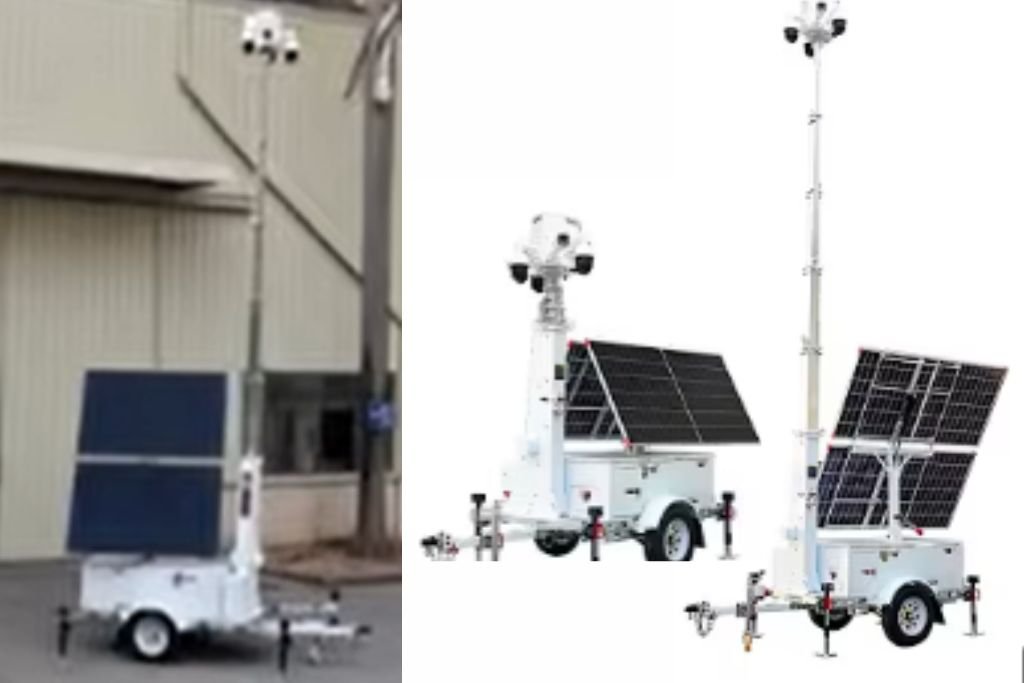
A solar surveillance trailer is a self-contained mobile security platform mounted on a towable trailer. Designed for rapid deployment, it uses solar panels to generate electricity, which is stored in onboard batteries to power surveillance equipment around the clock.
Unlike conventional CCTV systems that require extensive installation work and access to utility power, a solar surveillance trailer can be positioned almost anywhere. Once deployed, it provides continuous video monitoring through high-definition cameras connected to wireless communication networks, allowing security personnel to access live footage from virtually any location.
Many modern units also incorporate artificial intelligence, cloud storage, motion detection, thermal imaging, license plate recognition, loudspeaker systems, flashing warning lights, and automated alerts that enhance security while reducing the need for on-site personnel.
How Does a Solar Surveillance Trailer Work?
The operation of a solar surveillance trailer revolves around renewable energy and intelligent monitoring technologies working together seamlessly. Solar panels mounted on the trailer collect sunlight throughout the day and convert it into electrical energy. This energy charges a bank of deep-cycle batteries, ensuring uninterrupted operation even after sunset or during periods of cloudy weather.
The stored power supplies multiple surveillance cameras mounted on an extendable telescopic mast that provides an elevated viewing position. The increased height significantly improves visibility, allowing cameras to cover large areas while minimizing blind spots.
Captured video footage is transmitted using cellular networks such as 4G LTE or 5G, while some advanced systems support satellite internet for remote environments. Security personnel can monitor live video feeds through cloud-based platforms on computers, tablets, or smartphones regardless of their physical location.
Artificial intelligence continuously analyzes incoming video, distinguishing between humans, vehicles, animals, and environmental movement. When suspicious activity is detected, the system instantly sends alerts to designated personnel, allowing immediate action before incidents escalate.
Major Components of a Solar Surveillance Trailer
The effectiveness of a solar surveillance trailer depends on several integrated components working together.
Solar panels are the primary power source, generating clean, renewable electricity throughout daylight hours. High-efficiency photovoltaic panels maximize energy production while minimizing maintenance requirements.
A battery bank stores the collected solar energy for nighttime operation and periods of reduced sunlight. Many premium systems now utilize lithium batteries because of their longer lifespan, faster charging capabilities, and improved efficiency compared to traditional lead-acid batteries.
The telescopic mast elevates cameras well above ground level, often extending between twenty and thirty feet. This height dramatically increases surveillance coverage while reducing obstructions from buildings, vehicles, or landscaping.
Security cameras are the heart of the surveillance system. Most trailers feature high-definition or 4K cameras equipped with infrared night vision, optical zoom, wide-angle lenses, and pan-tilt-zoom functionality. Depending on operational needs, thermal imaging cameras may also be included for enhanced visibility in complete darkness or adverse weather.
Wireless communication equipment enables remote connectivity using cellular or satellite networks, allowing continuous access to live footage without requiring wired internet infrastructure.
Artificial intelligence software performs real-time video analytics by recognizing specific objects, identifying unusual behavior, detecting unauthorized access, and minimizing false alarms caused by weather conditions or wildlife.
Many systems also include deterrence equipment such as loudspeakers, flashing LED lights, sirens, and two-way communication features that allow operators to issue live voice warnings to trespassers.
Key Features That Make Solar Surveillance Trailers Unique
Modern solar surveillance trailers offer an impressive range of capabilities that distinguish them from traditional security systems.
One of their greatest strengths is complete energy independence. Since they operate entirely on solar power with battery backup, they eliminate the need for utility electricity and significantly reduce operating costs over time.
Their portable design allows rapid deployment wherever temporary security is needed. Construction projects, emergency response operations, outdoor events, and infrastructure maintenance sites can all benefit from immediate surveillance without waiting for permanent installations.
Continuous twenty-four-hour monitoring ensures properties remain protected both day and night. Infrared night vision, thermal cameras, and AI-powered analytics maintain effective surveillance regardless of lighting conditions.
Remote accessibility enables security managers to oversee multiple locations simultaneously through centralized cloud-based monitoring platforms. This improves efficiency while reducing staffing requirements.
Artificial intelligence adds another layer of protection by detecting suspicious activities automatically. Rather than overwhelming operators with constant notifications, AI filters irrelevant movement and prioritizes genuine security threats.
Cloud recording provides secure storage for surveillance footage, protecting valuable evidence from physical damage or theft while simplifying retrieval during investigations.
Weather-resistant construction ensures reliable operation in harsh environments including heavy rain, snow, dust, extreme heat, and strong winds.
Benefits of Using a Solar Surveillance Trailer
Organizations across numerous industries are investing in solar surveillance trailers because they provide significant operational and financial advantages.
One major benefit is reduced installation cost. Traditional CCTV systems often require trenching, electrical wiring, utility permits, internet infrastructure, and permanent poles. Solar surveillance trailers eliminate these expenses since they function independently.
Operational flexibility represents another important advantage. As projects move or security priorities change, trailers can easily be relocated without dismantling complex infrastructure. This mobility makes them especially valuable for temporary work sites.
Renewable solar power also contributes to sustainability initiatives by reducing dependence on fossil fuels and lowering carbon emissions. Companies pursuing environmental goals appreciate the combination of improved security and eco-friendly operation.
Improved crime prevention is another significant benefit. Highly visible surveillance cameras, flashing lights, warning signs, and public address systems create a powerful psychological deterrent that discourages theft, vandalism, and unauthorized access before crimes occur.
Real-time alerts allow rapid response to security incidents. Instead of discovering theft hours later, operators receive immediate notifications that enable law enforcement or security personnel to intervene quickly.
Because one remote monitoring center can supervise numerous trailers simultaneously, businesses often reduce security labor costs while improving overall site coverage.
Industries That Commonly Use Solar Surveillance Trailers
The versatility of solar surveillance trailers makes them valuable across a wide variety of industries.
Construction companies represent one of the largest user groups. Expensive machinery, building materials, copper wiring, fuel storage, and specialized tools make construction sites frequent targets for theft. Solar surveillance trailers help monitor worker safety while protecting valuable assets around the clock.
Utility companies deploy these systems to secure electrical substations, water treatment facilities, solar farms, wind farms, pipelines, and telecommunications infrastructure located in isolated areas where permanent surveillance would be prohibitively expensive.
Parking facilities benefit from enhanced vehicle security, license plate recording, accident documentation, and improved customer safety. Shopping centers, airports, hospitals, universities, and stadiums frequently utilize mobile surveillance during peak activity periods.
Event organizers rely on portable surveillance for concerts, festivals, sporting events, political gatherings, and outdoor exhibitions where temporary yet comprehensive security is essential.
Government agencies employ solar surveillance trailers during disaster response operations, border monitoring, emergency management, public demonstrations, and infrastructure protection.
Industrial facilities, warehouses, mining operations, agricultural businesses, and vacant commercial properties also utilize these systems to monitor remote assets while reducing unauthorized access.
Artificial Intelligence Is Transforming Mobile Surveillance
Artificial intelligence has fundamentally changed the capabilities of modern surveillance systems. Instead of simply recording video for later review, today’s solar surveillance trailers actively analyze events as they happen.
Advanced AI algorithms identify people, vehicles, bicycles, and other objects while distinguishing them from harmless movement such as blowing leaves or wildlife. This dramatically reduces false alarms that traditionally overwhelmed security personnel.
Behavior analysis enables systems to recognize unusual activity patterns including loitering, perimeter breaches, unauthorized entry, abandoned objects, and restricted area violations.
Some advanced platforms incorporate facial recognition where legally permitted, while others provide automatic license plate recognition that records vehicle information entering or leaving secured locations.
Machine learning continuously improves detection accuracy by adapting to environmental conditions and historical data, making AI-powered surveillance increasingly reliable over time.
Solar Surveillance Trailer vs Traditional CCTV Systems
While both technologies serve the same basic purpose, solar surveillance trailers offer several advantages over fixed CCTV installations.
Traditional systems require permanent electrical power, internet cabling, structural mounting, and extensive installation work. Relocating cameras often involves significant labor and expense.
Solar surveillance trailers, on the other hand, operate independently without permanent infrastructure. They can be deployed rapidly, repositioned whenever necessary, and continue functioning in locations where electricity is unavailable.
Fixed CCTV systems remain an excellent choice for permanent buildings with established utility connections. However, for temporary sites, remote facilities, construction projects, or changing security requirements, solar surveillance trailers provide considerably greater flexibility.
Renting Versus Buying a Solar Surveillance Trailer
Organizations should evaluate their long-term security requirements before deciding whether to rent or purchase.
Renting is often ideal for short-term projects lasting several weeks or months. Construction companies working on temporary developments, event organizers hosting festivals, or municipalities responding to emergencies may find rental agreements more economical.
Purchasing becomes more cost-effective for organizations requiring continuous surveillance across multiple projects over many years. Security firms, utility companies, government agencies, and large construction contractors often achieve greater long-term savings through ownership.
When evaluating total costs, buyers should consider maintenance, battery replacement schedules, software subscriptions, connectivity fees, warranty coverage, and expected equipment lifespan.
Factors to Consider Before Purchasing
Choosing the right solar surveillance trailer requires careful assessment of operational requirements.
Camera resolution significantly impacts image quality. Higher-resolution cameras provide clearer identification of individuals and vehicles, especially when zooming into recorded footage.
Battery capacity determines how long the system can operate during prolonged cloudy weather. Larger battery banks improve reliability in regions with variable sunlight.
Solar panel efficiency influences charging performance, particularly during winter months or in northern climates where daylight hours are limited.
Mast height affects overall coverage. Taller masts generally provide wider surveillance areas and reduce blind spots, making them suitable for large construction sites or parking facilities.
Connectivity options should match deployment locations. Sites with weak cellular signals may require satellite communication capabilities for uninterrupted monitoring.
Artificial intelligence features vary considerably among manufacturers. Buyers should evaluate object detection accuracy, alert customization, cloud integration, remote management capabilities, and software update policies before making a decision.
Durability also matters. Weather-resistant construction, corrosion protection, robust trailer frames, and high-quality components contribute to longer service life and lower maintenance costs.
Future Trends in Solar Surveillance Technology
The future of solar surveillance trailers is closely tied to advancements in renewable energy, artificial intelligence, and wireless communication.
Improved solar panel efficiency and next-generation battery technologies will extend operating time while reducing equipment size and maintenance requirements.
The global expansion of 5G networks will enable faster video transmission, lower latency, and improved remote control capabilities for surveillance systems.
Artificial intelligence will continue evolving toward predictive analytics, enabling systems to identify suspicious behavior before crimes occur rather than simply detecting ongoing incidents.
Integration with drones, autonomous security robots, smart city infrastructure, and Internet of Things devices will further enhance situational awareness and coordinated response capabilities.
Cloud computing and edge processing will also continue improving system performance by enabling faster analysis while reducing bandwidth consumption.
Frequently Asked Questions
What is the primary purpose of a solar surveillance trailer?
Its primary purpose is to provide portable, off-grid security monitoring for locations where permanent surveillance systems are impractical or too expensive to install.
Can a solar surveillance trailer operate at night?
Yes. Energy collected during daylight hours is stored in batteries, allowing continuous operation throughout the night.
Are these trailers suitable for remote locations?
Absolutely. They are specifically designed for areas without access to electricity or wired internet, often using cellular or satellite communication for remote monitoring.
How quickly can a solar surveillance trailer be deployed?
Many systems can be operational within an hour, although deployment time varies depending on trailer size, mast height, and site conditions.
Do solar surveillance trailers require regular maintenance?
Routine maintenance typically includes cleaning solar panels, inspecting batteries, verifying camera performance, checking communication equipment, and performing software updates to ensure optimal performance.
Conclusion
Solar surveillance trailers represent a significant advancement in mobile security technology by combining renewable energy, intelligent surveillance, wireless connectivity, and advanced analytics into a highly portable solution. Their ability to deliver reliable, around-the-clock protection without relying on permanent infrastructure makes them an ideal choice for construction sites, industrial facilities, public events, utility operations, parking lots, and countless other applications.
As artificial intelligence, battery technology, and renewable energy systems continue to improve, solar surveillance trailers will become even more capable, efficient, and affordable. Organizations seeking flexible, scalable, and environmentally responsible security solutions can benefit greatly from investing in these innovative systems. Whether deployed for temporary projects or long-term asset protection, solar surveillance trailers are redefining how modern security is delivered in an increasingly connected and mobile world.