Viscoy: Revolutionizing Industrial Inspection Through Robotics, Digital Technology, and Smart Maintenance
Industrial environments are becoming more complex every year, and maintaining critical assets has become one of the biggest challenges for companies worldwide. From oil refineries and power plants to marine facilities and manufacturing sites, organizations need reliable ways to inspect equipment, identify problems early, and prevent costly failures. Traditional inspection methods often involve significant downtime, safety risks, and difficult manual processes. This is where Viscoy enters the picture as a technology-driven company focused on transforming industrial inspection and asset maintenance.
Also Read: DPSIT
Viscoy has developed a reputation for providing advanced inspection solutions that combine robotics, remote visual inspection technologies, digital monitoring systems, and non-destructive testing methods. By helping industries examine difficult-to-access areas without putting workers in dangerous environments, the company is contributing to a safer, smarter, and more efficient future for industrial operations.
Understanding Viscoy and Its Role in Industrial Technology
Viscoy is a Singapore-based industrial technology company specializing in Asset Inspection and Maintenance (AIM) solutions. The company focuses on helping businesses improve asset reliability through innovative inspection equipment and advanced digital technologies.
Founded in 2014, Viscoy initially built its expertise around industrial videoscopes and inspection equipment before expanding into a wider range of technologies, including drones, robotics, corrosion monitoring systems, acoustic imaging, and pipeline inspection solutions.
The company operates in industries where equipment reliability and safety are extremely important. Industrial assets such as pipelines, storage tanks, engines, turbines, and processing equipment require regular inspection to ensure they remain safe and operational. A small defect that goes unnoticed can eventually lead to equipment failure, production delays, environmental damage, or serious safety incidents.
Viscoy’s goal is to make inspection processes more accurate, safer, and more efficient by reducing dependence on traditional manual inspection techniques.
The Evolution of Industrial Inspection
For decades, industrial inspections relied heavily on technicians physically examining equipment. While skilled professionals remain essential, many traditional methods come with challenges. Workers may need to enter confined spaces, climb structures, work at heights, or operate in environments containing hazardous materials.
Modern industries are increasingly adopting remote inspection technologies to overcome these limitations. Robotics, drones, sensors, and artificial intelligence are changing how companies monitor their assets.
Viscoy represents this shift toward smarter inspection. Instead of requiring workers to enter every difficult location, companies can use advanced equipment to collect detailed information remotely. This approach improves safety while also reducing inspection time and operational interruptions.
The growth of Industry 4.0 has accelerated demand for these technologies. Businesses are no longer focusing only on repairing equipment after failure. They are moving toward predictive maintenance strategies where problems are identified before they become major issues.
Viscoy’s Remote Visual Inspection Solutions
Remote Visual Inspection (RVI) is one of the core areas where Viscoy provides value. RVI technology allows engineers and technicians to inspect internal and external areas of industrial equipment without physically accessing dangerous locations.
Industrial cameras, videoscopes, robotic systems, and drones can capture high-quality images and videos that help maintenance teams evaluate equipment conditions.
For example, a technician inspecting a large industrial tank may traditionally need to enter the structure after extensive safety preparation. With remote inspection technology, a robotic device or drone can enter the area and provide real-time visual information.
These solutions help companies reduce inspection risks while improving the quality of collected data. Detailed images and recordings can also be stored digitally, allowing engineers to compare conditions over time and identify trends.
Robotics: Making Dangerous Inspections Safer
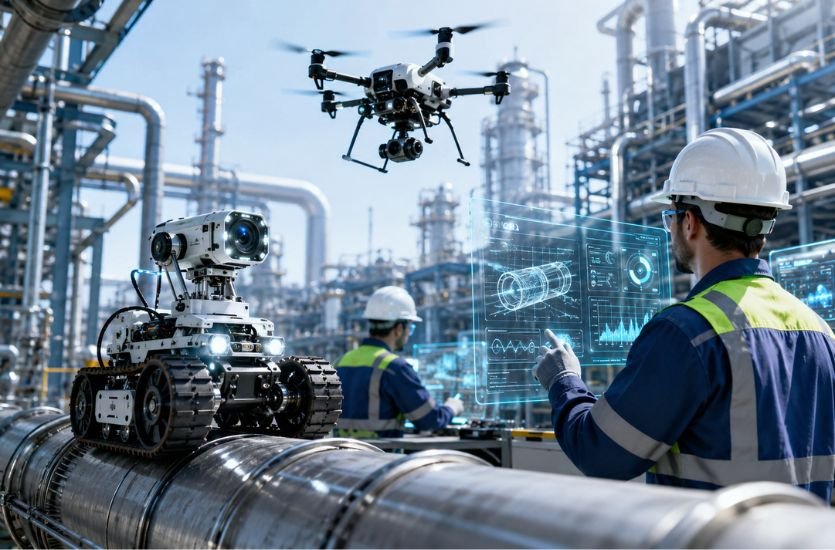
Robotics is one of the most important technologies behind Viscoy’s solutions. Industrial robots are increasingly being used for inspections in environments that are difficult, hazardous, or impossible for humans to access.
Robotic inspection systems can move through pipelines, confined spaces, and industrial structures while carrying cameras and sensors. These machines provide valuable information without exposing workers to unnecessary danger.
Pipeline inspection is a major example of where robotic technology provides significant benefits. Pipelines often transport valuable or hazardous materials, and detecting corrosion, cracks, or blockages early is essential.
Robotic crawlers equipped with cameras and inspection tools can travel inside pipelines to identify potential problems. This allows companies to perform maintenance decisions based on accurate information rather than assumptions.
Viscoy’s robotic inspection approach supports industries that require reliable asset monitoring while maintaining high safety standards.
Drone Technology and Confined Space Inspection
Drones have changed many industries, and industrial inspection is one of the areas where they provide significant advantages.
Viscoy provides drone-based inspection solutions designed for challenging environments. Specialized industrial drones can operate inside tanks, reactors, tunnels, and other confined spaces where human entry may involve risks.
One major advantage of inspection drones is their ability to quickly collect visual data. A drone can navigate complex areas, capture high-resolution images, and provide engineers with immediate information about asset conditions.
This technology is especially useful in industries such as oil and gas, chemical processing, and power generation, where equipment inspections are essential but can be expensive and time-consuming.
By using drones, companies can reduce shutdown periods and improve worker safety while maintaining detailed inspection records.
Non-Destructive Testing and Corrosion Monitoring
Corrosion is one of the biggest threats facing industrial infrastructure. Over time, exposure to chemicals, moisture, temperature changes, and environmental conditions can weaken metal structures.
Viscoy offers non-destructive testing technologies that help companies monitor corrosion without damaging equipment or interrupting operations.
Traditional inspection methods may require removing components or stopping production. Non-destructive testing allows engineers to evaluate material conditions while keeping equipment operational.
Advanced monitoring systems can measure changes in metal thickness and detect early signs of deterioration. This information helps companies plan maintenance activities before serious damage occurs.
For industries managing expensive infrastructure, early detection can save millions of dollars by preventing unexpected failures.
Pipeline Inspection and Infrastructure Maintenance
Pipelines play a crucial role in industries such as energy, water management, and manufacturing. However, maintaining pipelines can be challenging because much of the infrastructure is hidden underground or located in difficult environments.
Viscoy provides pipeline inspection technologies that help organizations examine internal pipeline conditions. These systems can identify issues such as cracks, corrosion, blockages, and structural damage.
Regular pipeline inspection improves reliability and reduces the possibility of leaks or unexpected breakdowns. It also supports environmental protection by helping companies detect potential problems before they become major incidents.
As global infrastructure continues to age, demand for advanced pipeline monitoring solutions is expected to increase.
Acoustic Imaging and Leak Detection Technology
Another important area of Viscoy’s technology portfolio is acoustic inspection. Sound-based technologies can detect problems that may not be visible through traditional methods.
Acoustic cameras can identify issues such as gas leaks, compressed air leaks, and equipment abnormalities by analyzing sound patterns.
Early detection of leaks is valuable for industries because leaks can cause financial losses, safety concerns, and environmental damage. By identifying problems quickly, companies can perform repairs before the situation becomes more serious.
These technologies support the broader goal of creating smarter and more sustainable industrial operations.
Industries That Benefit From Viscoy Solutions
Viscoy’s inspection technologies are used across several important industries where asset performance and safety are critical.
The oil and gas sector is one of the major industries benefiting from advanced inspection solutions. Refineries, pipelines, and processing facilities require constant monitoring to prevent equipment failures and maintain safe operations.
Power generation companies also rely on inspection technologies to examine turbines, boilers, electrical systems, and other critical components. Any unexpected failure in a power facility can result in major disruptions.
The marine and offshore industry faces unique inspection challenges because equipment is often exposed to harsh environments. Robotics and remote inspection tools help companies maintain ships, offshore platforms, and underwater structures.
Manufacturing companies also benefit from these technologies because regular inspection helps improve productivity and reduce unexpected downtime.
Viscoy and the Future of Smart Maintenance
The future of industrial maintenance is moving toward automation, digital monitoring, and predictive analytics. Companies are increasingly looking for solutions that provide real-time information about asset conditions.
Viscoy aligns with this transformation by combining hardware technologies with digital approaches. The company’s solutions support a future where industries can monitor equipment continuously and make maintenance decisions based on accurate data.
Artificial intelligence and machine learning are expected to further enhance inspection technologies. Future systems may analyze inspection data automatically, identify potential failures, and recommend maintenance actions before problems occur.
This transition from reactive maintenance to predictive maintenance represents a major change in industrial operations.
The Importance of Safety and Sustainability
Industrial safety is not only about protecting workers; it is also connected to environmental responsibility and operational efficiency.
By reducing the need for humans to enter dangerous environments, technologies provided by companies like Viscoy help create safer workplaces.
At the same time, better inspection methods can support sustainability goals. Detecting leaks, preventing equipment failures, and improving resource efficiency can reduce environmental impact.
Industries worldwide are under increasing pressure to operate responsibly, and advanced inspection technology plays an important role in achieving these objectives.
Why Viscoy Stands Out in Industrial Technology
Viscoy’s strength comes from combining multiple technologies into complete inspection solutions. Instead of focusing on a single product category, the company provides a range of tools designed to solve different industrial challenges.
Its approach reflects the changing needs of modern businesses. Companies today require faster inspections, better data, improved safety, and reduced operational costs.
Through robotics, drones, digital monitoring, and advanced inspection equipment, Viscoy helps industries move toward a more intelligent approach to asset management.
Conclusion
Viscoy represents the growing connection between industrial operations and advanced technology. As industries continue to demand safer, faster, and more reliable inspection methods, companies providing innovative solutions will play an increasingly important role.
By combining robotics, remote visual inspection, non-destructive testing, and digital monitoring technologies, Viscoy is helping organizations maintain critical assets more effectively. Its solutions demonstrate how technology can transform traditional inspection practices and create safer industrial environments.
The future of industrial maintenance will depend on smarter systems that can detect problems early, reduce risks, and improve efficiency. With its focus on innovation and digital transformation, Viscoy is positioned as part of the movement shaping the next generation of industrial inspection.