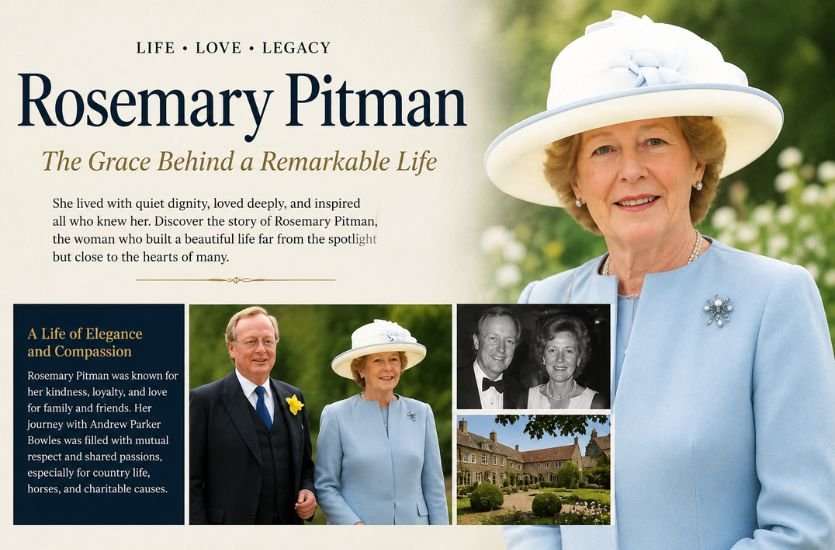
Rosemary Pitman: The Life, Legacy, and Story Behind a Remarkable Figure in British Society
History often remembers prominent public figures while quietly overlooking the individuals who influenced their lives from behind the scenes. Rosemary Pitman was one such person. Though she rarely sought the spotlight, her name has remained connected to British society through her marriage to Andrew Parker Bowles and her place within aristocratic circles. Her life was defined not by public ambition or celebrity but by dignity, resilience, and meaningful personal relationships that earned her admiration among those who knew her.
Also Read: Kirk Gerndt
Unlike many figures associated with Britain’s upper social circles, Rosemary Pitman maintained a reputation for discretion and grace. She represented a generation that valued privacy over publicity, making her an intriguing personality for historians and readers interested in modern British social history. While media coverage of her often focused on her marriage and connections to the royal family, there was much more to her story than newspaper headlines suggested. Understanding Rosemary Pitman requires looking beyond her associations and appreciating the woman herself, her character, and the life she built.
Early Life and Family Background
Rosemary Alice Pitman, born Rosemary Alice Dickinson in 1940, grew up during a period of significant change in Britain. Her childhood coincided with the years surrounding the Second World War, a time that shaped the values of resilience, responsibility, and community in countless British families. Although relatively little has been publicly documented about her early years, those who later knew her described her as possessing warmth, kindness, and quiet confidence.
Growing up in Britain during the mid-twentieth century meant experiencing both traditional values and rapid social transformation. Education, family life, and community played important roles in shaping the outlook of young people, and Rosemary developed a reputation for intelligence, compassion, and genuine interest in others.
Unlike many modern public personalities, she did not pursue fame or media attention. Instead, she built meaningful relationships and earned respect through her conduct rather than public appearances.
Becoming Rosemary Pitman
Before becoming widely known within British high society, Rosemary married and adopted the surname Pitman. Although details of her first marriage remained largely private, the surname became the one by which many people knew her throughout much of her adult life.
Her preference for privacy reflected her personality. Even as public curiosity about those connected to Britain’s aristocracy increased during the late twentieth century, Rosemary rarely gave interviews or attempted to cultivate a public image. This discretion distinguished her from many individuals who found themselves linked to well-known families.
Her ability to maintain personal dignity despite growing public interest became one of her defining characteristics.
Connection to British High Society
British society has long included networks of families connected through friendships, education, sporting interests, charitable organizations, and shared traditions. Rosemary Pitman became a respected member of these circles, particularly through her involvement in countryside life and equestrian interests.
Country estates, horse racing, hunting traditions, and charitable events formed an important part of social life for many members of Britain’s upper classes during the twentieth century. Rosemary was regarded as someone who genuinely enjoyed these activities rather than participating merely for status.
Friends often described her as approachable, thoughtful, and considerate. Rather than commanding attention, she preferred meaningful conversations and lasting friendships. These qualities contributed significantly to the affection people felt toward her.
Marriage to Andrew Parker Bowles
Perhaps the aspect of Rosemary Pitman’s life that attracted the greatest public attention was her marriage to Andrew Parker Bowles in 1996.
Andrew Parker Bowles had already become widely known through his distinguished military career and, even more notably, his previous marriage to Camilla Parker Bowles, who would later become Queen Camilla following her marriage to King Charles III.
When Andrew and Rosemary married, media interest naturally followed because of Andrew’s previous relationship and the continuing fascination surrounding Britain’s royal family. Newspapers reported extensively on the wedding, often emphasizing the historical connections rather than focusing on Rosemary herself.
Despite this increased attention, Rosemary remained characteristically private. She did not seek interviews or attempt to capitalize on public curiosity. Instead, she continued living quietly, supporting her husband while maintaining the gracious manner for which she had become known.
Observers frequently noted that the marriage appeared happy and based upon mutual respect, shared interests, and longstanding friendship.
Life Beyond Public Headlines
Although many articles focused almost exclusively on Rosemary’s marriage, those who knew her personally painted a broader picture.
She was known for her generosity, loyalty, and willingness to help friends and charitable causes without seeking recognition. Her personality reflected traditional British values of modesty and service.
Social gatherings involving Rosemary were remembered less for glamour and more for warmth and hospitality. She possessed an ability to make guests feel comfortable regardless of their background or social standing.
Friends often recalled her excellent sense of humor, thoughtful conversation, and genuine interest in the lives of others. These personal qualities explain why she was deeply respected within her community.
Love of Country Life
Country living occupied an important place in Rosemary Pitman’s life.
The British countryside has historically represented more than scenic landscapes. For many families, it symbolizes tradition, continuity, and close community ties. Rosemary appreciated these values and actively embraced rural life.
Horse riding, gardening, outdoor activities, and support for countryside organizations reflected interests shared by many within her social circle. Her enjoyment of these pursuits stemmed from authentic enthusiasm rather than public expectation.
Visitors frequently described her home as welcoming and comfortable rather than ostentatious. Hospitality remained one of the characteristics most closely associated with her personality.
A Woman of Privacy
One of the most remarkable aspects of Rosemary Pitman’s life was her consistent commitment to privacy.
In an age when public curiosity surrounding royal connections intensified through television, newspapers, and later the internet, many individuals found themselves under increasing media scrutiny.
Rosemary chose a different path.
She avoided unnecessary publicity and allowed her actions rather than public statements to define her reputation. This restraint earned admiration from friends and observers alike.
Even today, relatively few photographs, interviews, or personal accounts exist compared with other figures connected to Britain’s aristocracy. This scarcity reflects not mystery but deliberate discretion.
Relationship with Family and Friends
Those closest to Rosemary consistently emphasized her loyalty.
Friendships often lasted decades, demonstrating the trust she inspired. She valued genuine human connections and invested considerable time in maintaining relationships with family members and longtime companions.
Her compassionate nature became particularly evident during difficult periods experienced by friends. Rather than offering public gestures, she preferred practical support, private encouragement, and quiet acts of kindness.
Such qualities rarely generate headlines, yet they frequently define a person’s true legacy.
Charity and Community Involvement
Like many members of Britain’s upper social circles, Rosemary supported charitable activities throughout her life.
Although she rarely publicized her contributions, acquaintances remembered her willingness to assist organizations devoted to community welfare and social causes.
British charitable traditions often depend upon individuals who contribute time, resources, and organizational support without seeking recognition. Rosemary exemplified this approach.
Her participation reflected sincere commitment rather than social obligation, reinforcing the respect she received among friends and colleagues.
Challenges of Public Association
Being connected to famous personalities often brings unexpected challenges.
Because Andrew Parker Bowles remained linked in public memory to Camilla Parker Bowles and the British royal family, Rosemary occasionally found herself mentioned within stories centered primarily on others.
This situation required patience and emotional resilience.
Rather than expressing frustration over media attention or comparisons, Rosemary maintained her characteristic composure. She understood that public curiosity could not always be controlled, but personal dignity could.
Her graceful handling of this attention further strengthened her reputation.
Her Final Years
During the later years of her life, Rosemary faced serious illness.
She was diagnosed with cancer, a disease that affects millions of families worldwide regardless of social position or public recognition. Friends described her courage throughout this difficult period as consistent with the strength she had demonstrated throughout her life.
Despite health challenges, she reportedly remained focused on family, close friendships, and maintaining as much normality as possible.
Her determination inspired those around her, who admired both her resilience and positive outlook.
Passing and Tributes
Rosemary Pitman passed away in 2010 after battling cancer.
Her death prompted heartfelt tributes from friends, relatives, and members of Britain’s social community. Many remembered her not because of newspaper headlines but because of the kindness she had shown throughout her life.
Those who paid tribute frequently highlighted her generosity, intelligence, hospitality, and unwavering loyalty.
Rather than emphasizing titles or social status, they celebrated the qualities that had made her deeply valued on a personal level.
Such tributes reveal much about the character of an individual whose greatest achievements often occurred quietly and away from public attention.
Public Interest in Rosemary Pitman
Interest in Rosemary Pitman continues today for several reasons.
Researchers exploring the history of Britain’s royal family often encounter her name through Andrew Parker Bowles. Readers interested in aristocratic history similarly discover references to her within discussions of twentieth-century British society.
Genealogists, historians, and royal enthusiasts frequently search for information about her life, hoping to better understand the network of relationships surrounding Britain’s most prominent families.
Although available public information remains limited, this scarcity has only increased curiosity about her story.
Her Legacy
Legacy should not be measured solely by public recognition.
Some individuals influence the world through leadership, politics, or entertainment. Others leave lasting impressions through kindness, integrity, friendship, and personal example.
Rosemary Pitman belongs to the latter group.
She demonstrated that dignity does not require publicity and that genuine respect is earned through consistent character rather than public image.
Her life reminds us that history consists not only of monarchs, politicians, and celebrities but also of thoughtful individuals whose influence is felt within families, friendships, and communities.
Even decades after her passing, those researching her life encounter recurring descriptions emphasizing warmth, compassion, loyalty, and grace.
These qualities represent a legacy that extends beyond newspaper archives.
Why Rosemary Pitman Remains Relevant Today
Modern society often rewards constant visibility. Social media encourages individuals to share every aspect of daily life, while public attention frequently becomes a measure of success.
Rosemary Pitman’s life offers an alternative perspective.
She demonstrated that privacy can coexist with meaningful influence. Personal integrity, loyal friendships, and compassionate service remain valuable regardless of public recognition.
Her story also provides insight into Britain’s evolving social landscape during the second half of the twentieth century. Through her experiences, readers gain a better understanding of aristocratic traditions, changing public attitudes toward the royal family, and the challenges faced by individuals connected to famous names.
Rather than becoming defined solely by her associations, Rosemary built a reputation grounded in character.
Conclusion
Rosemary Pitman’s story is ultimately one of quiet strength, enduring dignity, and genuine humanity. Although history frequently remembers her because of her marriage to Andrew Parker Bowles and her indirect connection to the British royal family, those who knew her recognized a far richer individual. She earned admiration through kindness rather than publicity, loyalty rather than status, and compassion rather than ambition.
Her life illustrates that true influence is often exercised away from cameras and headlines. Through meaningful friendships, charitable involvement, devotion to family, and unwavering grace, Rosemary Pitman created a legacy that continues to interest historians and readers alike. While public records reveal only portions of her journey, the consistent descriptions of her character paint the portrait of a woman remembered with affection and respect.
In an era increasingly defined by public exposure, Rosemary Pitman’s example remains refreshingly timeless. Her story reminds us that authenticity, humility, and integrity never lose their value, and that the quiet lives lived with purpose often leave the deepest and most lasting impressions.