What Is a Magnifying Glass Used For? Exploring Its Everyday, Scientific, and Professional Applications
A tiny detail hidden on a coin, the delicate pattern on a butterfly’s wing, or the small text on a medicine label can become much clearer with the simple help of a magnifying glass. For centuries, this small optical tool has helped people explore the world beyond what the naked eye can easily see. Although modern technology has introduced advanced microscopes and digital imaging systems, the magnifying glass remains one of the most practical, affordable, and widely used tools for enlarging objects.
Also Read: Roxane UK Lichfield: A Complete Guide to the UK’s Leading Bottled Water Manufacturing Hub
A magnifying glass is more than just a tool for making things look bigger. It helps people observe details, examine materials, solve problems, learn about nature, and perform precise tasks in different industries. From students studying insects to jewelers inspecting valuable stones, magnifying glasses continue to play an important role in everyday life and professional work.
What Is a Magnifying Glass?
A magnifying glass is a simple optical device designed to make small objects appear larger. It usually consists of a convex lens attached to a frame, often with a handle for easy use. The lens bends light rays in a way that creates an enlarged image of an object placed close to it.
The main component responsible for magnification is the convex lens. Unlike a flat piece of glass, a convex lens is curved outward and causes light rays to come together. When an object is viewed through this lens from the correct distance, the eye receives an enlarged virtual image, making small details easier to see.
Magnifying glasses are available in different shapes and sizes. Some are small handheld tools used for quick inspections, while others include built-in lighting, adjustable stands, or digital screens for more advanced applications.
How Does a Magnifying Glass Work?
The science behind a magnifying glass is based on the behavior of light. When light passes through the curved surface of a convex lens, it bends through a process called refraction. This bending changes the way the object appears to the viewer.
When an object is placed closer to the lens than its focal point, the lens produces a larger virtual image. The human eye interprets this enlarged image as if the object itself has become bigger. The closer the object is positioned within the correct range, the more noticeable the magnification effect becomes.
The amount of enlargement depends on the strength of the lens. A stronger lens with a shorter focal length can provide greater magnification, while weaker lenses provide a wider viewing area with less enlargement.
Everyday Uses of a Magnifying Glass
One of the most common uses of a magnifying glass is reading small text. Many people use magnifiers to view tiny letters on newspapers, books, maps, product labels, and official documents. For individuals who experience difficulty reading small print, a magnifying glass can make everyday tasks more comfortable and convenient.
Medicine packaging is another area where magnifying glasses can be helpful. Prescription labels often contain small instructions, dosage information, and warnings. A magnifier allows users to read these details more clearly and reduce the chance of misunderstanding important information.
Magnifying glasses are also useful around the home for examining small objects. People may use them to check serial numbers on electronics, inspect tiny damages, identify small parts, or look closely at materials during repair projects.
Magnifying Glass Uses in Science and Education
A magnifying glass has long been a favorite tool in classrooms because it introduces students to the world of observation. Before using advanced laboratory equipment, many students begin exploring science with a simple magnifier.
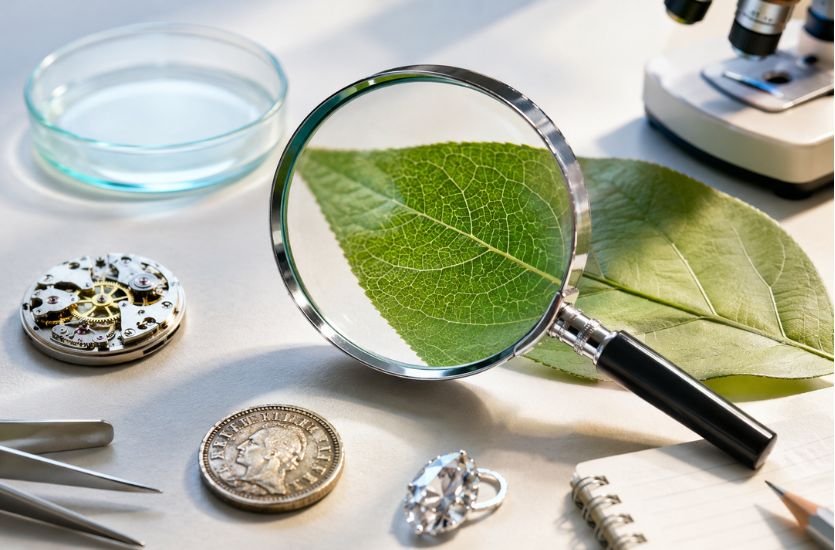
In biology lessons, students use magnifying glasses to observe leaves, flowers, insects, and other natural objects. They can examine the patterns on plant surfaces, study insect structures, and discover details that are invisible during normal observation.
Outdoor exploration also becomes more exciting with a magnifying glass. Children and researchers can investigate tree bark, soil particles, rocks, seeds, and tiny organisms. This encourages curiosity and helps people develop a better understanding of nature.
Although a magnifying glass cannot reveal microscopic details like a laboratory microscope, it provides an easy introduction to scientific observation without requiring expensive equipment.
Use of Magnifying Glass in Jewelry and Gemstone Inspection
The jewelry industry relies heavily on magnification tools. Jewelers use specialized magnifying glasses, often called loupes, to inspect diamonds, gemstones, and precious metals.
A magnifier helps professionals examine the quality of gemstones by revealing small details such as internal marks, surface imperfections, and cutting accuracy. Jewelers can also check engravings, trademarks, and authenticity markings on valuable items.
When evaluating diamonds, magnification allows experts to identify characteristics that affect quality and value. These observations help determine whether a gemstone is natural, treated, or damaged.
Because jewelry requires extreme attention to detail, magnifying tools remain an essential part of professional craftsmanship.
Magnifying Glass Use in Coin and Stamp Collecting
Collectors often use magnifying glasses to study valuable items. Coin collectors examine coins for important details such as mint marks, small design differences, scratches, and manufacturing errors.
A tiny variation in a coin’s design can sometimes determine its rarity and value. Without magnification, many of these differences would remain unnoticed.
Stamp collectors also rely on magnifiers to inspect printing patterns, colors, paper quality, and small details that help identify rare stamps. A magnifying glass allows collectors to carefully analyze their collections and protect valuable pieces.
Magnifying Glass Applications in Electronics Repair
Modern electronics contain extremely small components that require careful inspection. Technicians working on circuit boards, smartphones, computers, and other devices often use magnifying glasses to view tiny parts.
A magnifier helps repair specialists identify damaged connections, inspect solder joints, locate small screws, and examine components that are difficult to see with normal vision.
Although many professionals now use digital microscopes, traditional magnifying glasses remain useful because they are portable, simple, and quick for basic inspections.
Use in Watch Repair and Precision Work
Watchmaking is another field where magnification plays an important role. Mechanical watches contain extremely small gears, springs, screws, and moving parts that require careful handling.
Watch repair professionals use magnifying lenses to inspect components, identify problems, and perform delicate adjustments. The ability to see tiny mechanisms clearly helps improve accuracy and prevents damage during repairs.
Other precision industries, including model building, miniature artwork, and detailed craftsmanship, also benefit from magnification tools.
Magnifying Glass Use in Forensics and Investigation
Magnifying glasses have been associated with detective work because they help investigators examine small details. While modern forensic laboratories use advanced technology, magnification still has practical applications.
Investigators may use magnifiers to inspect documents, markings, materials, and physical evidence. Small details such as scratches, patterns, or unusual features can sometimes provide useful information during examinations.
The famous image of detectives using magnifying glasses reflects the tool’s historical connection with careful observation and investigation.
Magnifying Glass in Arts and Crafts
Creative professionals often use magnifying glasses when working on detailed projects. Artists who create miniature paintings, jewelry designs, embroidery, and decorative crafts may need extra visual assistance to achieve precision.
A magnifier helps artists work with tiny patterns, fine lines, and small materials. It allows greater control and accuracy, especially when creating highly detailed designs.
Hobbyists also use magnifying glasses for activities such as building models, repairing collectibles, and completing intricate craft projects.
Magnifying Glass Uses in Nature Observation
Nature enthusiasts frequently carry magnifying glasses during outdoor activities. They allow people to explore details that are normally overlooked.
A simple walk through a garden or forest can become a learning experience when using a magnifier. People can observe the structure of leaves, insect bodies, flower patterns, and small natural textures.
Gardeners may use magnifiers to inspect plants for signs of pests or diseases. Researchers studying insects and plants may also use portable magnification tools during fieldwork.
Types of Magnifying Glasses
Different types of magnifying glasses are designed for specific needs. A handheld magnifier is the most common type and is used for general reading and inspection tasks. It is lightweight, portable, and easy to carry.
Illuminated magnifying glasses include built-in lights that improve visibility in low-light conditions. These are especially useful for reading, crafting, and detailed inspections.
Stand magnifiers are designed to stay in a fixed position, making them helpful for people who need hands-free viewing. Digital magnifiers use cameras and screens to display enlarged images and often provide higher levels of customization.
Head-mounted magnifiers are commonly used by professionals who need both hands free while working on detailed tasks.
Benefits of Using a Magnifying Glass
Magnifying glasses provide several advantages because they are simple, affordable, and convenient. They do not require complicated setup or technical knowledge, making them accessible for people of all ages.
They improve visibility, help reduce eye strain, and make small details easier to analyze. Their lightweight design allows users to carry them anywhere, whether for reading, outdoor exploration, or professional work.
Another major advantage is their affordability. Compared with advanced optical equipment, magnifying glasses provide useful enlargement at a much lower cost.
Limitations of Magnifying Glasses
Despite their usefulness, magnifying glasses have limitations. They cannot provide the extremely high magnification levels available with microscopes. They are best suited for objects that are small but still visible to the human eye.
Strong magnification may also reduce the viewing area and create distortion around the edges of the lens. Proper lighting and positioning are important for achieving the clearest image.
For scientific research involving cells, bacteria, or microscopic structures, specialized microscopes are required.
Can a Magnifying Glass Start a Fire?
A magnifying glass can concentrate sunlight into a small point, creating heat. Under certain conditions, this concentrated energy can ignite dry materials such as paper, leaves, or wood.
This happens because the convex lens focuses sunlight into a tiny area, increasing the temperature at that point. For this reason, magnifying glasses should not be left in direct sunlight and should always be handled responsibly.
Final Thoughts
A magnifying glass may appear to be a simple tool, but its impact is significant. From helping people read small text to supporting scientific exploration, jewelry inspection, electronics repair, and creative work, it continues to serve countless purposes.
Its ability to reveal hidden details makes it valuable for education, hobbies, professional industries, and everyday activities. While modern technology has created more powerful imaging tools, the magnifying glass remains a practical example of how a simple invention can help people see and understand the world in greater detail.